







Subscribe to our mailing list

June 17, 2026 | Donor Acquisition, Donor Data, Donor Retention, Fundraising Events, Fundraising Operations, Online Fundraising
30 Online Fundraising KPIs Your Nonprofit Should Be Tracking
Key Nonprofit Metrics for Improving Online Giving Performance
Online fundraising gives organizations more ways than ever to reach donors, raise money, and grow supporter relationships. But with more digital activity comes more data to sort through—and more benchmarks for measuring success.
Tracking key performance indicators (KPIs) makes it easier to know:
- Which campaigns are working
- Which channels are driving revenue
- Where your team should focus next
In this blog, we explain why KPIs matter for your nonprofit’s online fundraising, and the 30 most important data points to track. Whether you’re looking to improve your donor conversion rates or grow your recurring giving program, this guide can help you make sense of the numbers and build a smarter online fundraising strategy.
What are KPIs in online fundraising?
KPIs, or key performance indicators, are measurable values that help nonprofits track progress toward specific fundraising goals. When consistently measured and reported using your fundraising CRM, KPIs show you what’s working—and what’s not—in your nonprofit’s online fundraising strategy.
In online fundraising, KPIs can help you see:
- How much revenue your organization is raising online
- How many donors are giving, and how much
- Which channels donors are giving through
- How well your online donation form is converting
- Whether donors are continuing to give over time
This makes KPI tracking essential for nonprofits that want not only to report on past results, but to improve online giving performance over time.
Why KPIs matter for nonprofit fundraising
KPIs help nonprofit fundraisers make smarter, more informed decisions. Instead of guessing which emails, campaigns, events, or giving channels are most effective, your team can use data to understand what actually drives results.
Tracking the right online fundraising KPIs can help your nonprofit:
- Measure campaign performance
- Identify your strongest giving channels
- Increase donor conversion rates
- Grow recurring giving revenue
- Improve donor retention
- Understand fundraising return on investment
- Spend your time and budget where it matters most
In online fundraising, KPIs are signals your nonprofit can use to improve future fundraising appeals, adapt to donor behaviors, and raise more money online.
More broadly, regularly reporting on key metrics is important to sustaining the fiscal health of your nonprofit organization—and necessary for maintaining the trust of your constituents, board members, and communities.
Looking to learn more about how your fundraising CRM’s reporting tools can help you turn KPIs into smarter planning and increased revenue?
Read our blog: 12 Nonprofit Reports That Are Essential to Nonprofit Strategic Planning and Growth

30 online fundraising KPIs for nonprofits
Online fundraising KPIs help nonprofits understand what’s working across their multichannel digital campaigns, online donation forms, donor outreach, and fundraising events. By intentionally tracking the right metrics, your team can make informed decisions that deepen donor engagement and raise more online donations.
Online fundraising revenue KPIs
These metrics show how much your online fundraising efforts are bringing in and whether your revenue is growing over time.
Use these KPIs to answer questions like:
- What percentage of our revenue are we raising online?
- Are online donors making larger gifts or more modest contributions?
- Which campaigns are seeing the strongest results?
- Is our online fundraising program growing sustainably?
1) Total online revenue raised
What it means: The total amount of money your nonprofit raises through online giving channels during a specific time period.
Why it matters: This is one of the clearest indicators of online fundraising performance. It helps you understand whether your digital fundraising efforts are growing, stagnating, or declining.
2) Total number of online gifts
What it means: The total number of individual donations made online.
Why it matters: This helps you understand donation volume. If revenue is increasing, this metric can show whether that growth is coming from more gifts, larger gifts, or both.
3) Average online gift size
What it means: The average dollar amount of donations made online.
Why it matters: This can help you evaluate donor generosity, giving capacity, and the effectiveness of your suggested giving amounts and campaign messaging. It’s also useful for identifying opportunities to encourage larger gifts.
4) Donation size growth
What it means: The change in average gift size over time.
Why it matters: This metric indicates whether donors are giving more, less, or about the same compared to previous campaigns or fiscal periods.
5) Online fundraising ROI
What it means: The revenue raised online compared to the cost of your online fundraising efforts.
Why it matters: ROI helps your organization determine whether your campaigns, platforms, and staff time are seeing strong returns—or costing more than they bring in. If you’re investing significant resources into your online fundraising but seeing only small or modest returns, you may need to revisit your strategy or find new tools.
Grow your online fundraising revenue with DonorPerfect + Givecloud
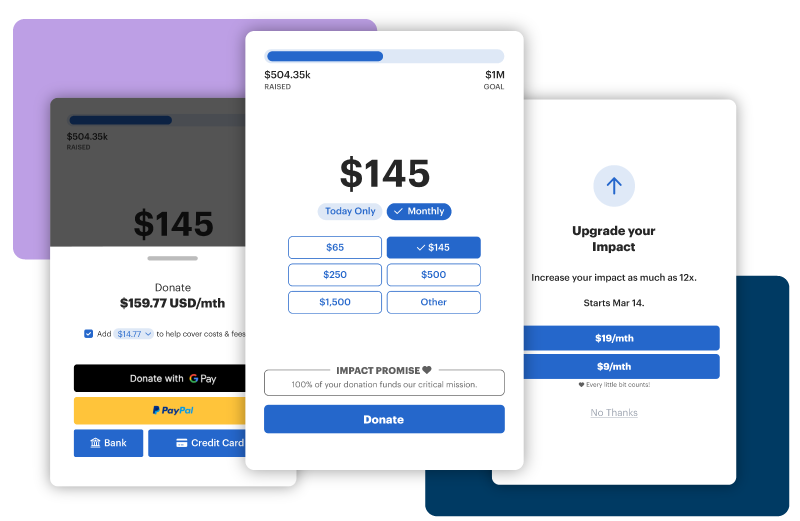
Your donation form plays a major role in the success and growth of your online fundraising. With DonorPerfect and Givecloud, nonprofits can create modern, mobile-friendly online donation experiences while keeping gift and donor data connected—and grow online revenue by up to 72%.
Donor growth and conversion KPIs
Your nonprofit can use these KPIs to understand if you’re attracting new donors, converting supporters, and keeping donors engaged.
These metrics are useful for improving:
- Online donation forms
- Campaign landing pages
- New donor acquisition strategies
- Donor stewardship plans
- Lapsed donor outreach
- Year-end and seasonal campaigns
6) New online donors
What it means: The number of first-time donors who make a gift online.
Why it matters: New donor growth shows whether your nonprofit is expanding its reach and bringing new supporters into your network. When compared to total new donor growth, this KPI can also indicate what percentage of your new donors are opting to give online over other methods.
7) Donor growth rate
What it means: The percentage increase (or decrease) in your online donor base over time.
Why it matters: Donor growth rate helps you understand whether your online fundraising program is growing sustainably.
8) Donation form conversion rate
What it means: The percentage of donation page visitors who access your form and complete a gift.
Why it matters: Donation form conversion rate is one of the most important metrics in online fundraising for nonprofits, because it shows how effectively your online giving
experience turns interest into completed gifts.
9) Donor retention rate
What it means: The percentage of online donors who give again after making a previous gift.
Why it matters: Donor retention is critical for your organization’s long-term financial health. A strong donor retention rate means your nonprofit is keeping online supporters engaged beyond the first gift.
10) Donor reactivation rate
What it means: The percentage of lapsed donors who re-engage with your organization and make another gift.
Why it matters: Reactivating lapsed donors is often more cost-efficient than acquiring brand-new donors. This KPI helps you measure how well your nonprofit is reconnecting with online supporters who have not given recently.
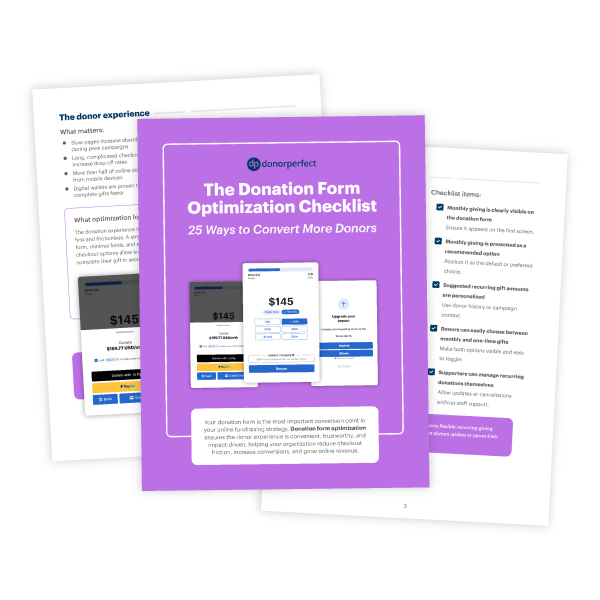
Small changes to your online donation form can have a big impact on donor conversion. Download our free Donation Form Optimization Checklist for 25 improvements that help supporters complete their gifts—from digital wallets and suggested giving amounts to recurring gift prompts and mobile-friendly design.
Recurring giving KPIs
The following metrics help you measure the health of your recurring or monthly giving program.
Recurring giving KPIs can help your nonprofit understand:
- How much predictable revenue you can count on
- Whether your monthly donor base is growing
- How many recurring donors are staying enrolled
- Whether recurring donors are increasing their gift amounts over time
- Where donor churn is affecting long-term revenue
11) Total recurring giving revenue
What it means: The total revenue generated from recurring or monthly gifts.
Why it matters: Recurring giving revenue helps your nonprofit understand how much consistent and reliable income is generated by your online fundraising program.
12) Number of recurring donors
What it means: The number of active donors who are enrolled in monthly or recurring giving.
Why it matters: This indicates the size of your recurring donor community and helps you track growth in monthly giving participation.
13) Recurring giving percentage
What it means: The proportion of your total online revenue that comes from recurring giving.
Why it matters: This KPI shows you how much of your online fundraising program is supported by repeatable revenue instead of one-time gifts. It can also indicate how effectively your donation page and online donation form encourage recurring giving.
14) Recurring giving retention rate
What it means: The percentage of recurring donors who continue giving over time.
Why it matters: Recurring donor retention helps you monitor donor loyalty, payment continuity, and the overall stability of your monthly giving program.
15) Recurring upgrade rate
What it means: The percentage of recurring donors who increase their gift amount.
Why it matters: This metric helps you measure whether your nonprofit is successfully deepening relationships with recurring donors over time.
Your donors are ready for a monthly gift—they just need an extra nudge.
Givecloud’s online donation forms make it easier to build your recurring or monthly giving program, with automatic upgrade prompts on one-time gifts.
Want to learn more? See Givecloud’s recurring giving features in action >>

Multichannel campaign performance KPIs
These KPIs show which digital channels are driving donations, which ones need improvement, and how supporters move from outreach to completed gift.
Use multichannel campaign metrics to:
- Compare fundraising performance across campaigns and appeals
- Identify which messaging generates the most donor action
- Understand where donors are entering your online giving experience
- See which channels drive the most revenue
- Optimize your multichannel communications for donor conversion
16) Number of donations by source
What it means: The number of gifts generated by each channel, such as email, SMS, social media, paid ads, or your fundraising website.
Why it matters: This metric helps you understand where your online donations are coming from and which digital channels are most effective at generating giving activity.
17) Revenue by source
What it means: The total dollars raised by each digital fundraising channel.
Why it matters: Revenue by source shows you which channels are driving the most financial impact, not just the most clicks or traffic.
18) Average gift size by source
What it means: The average donation amount from each channel.
Why it matters: Some channels may bring in fewer donors but larger gifts. This KPI helps your team understand the value of each audience and campaign source—and adapt your outreach strategy accordingly.
19) Conversion rate by source
What it means: The percentage of message recipients, visitors, or campaign participants from each source who complete a donation.
Why it matters: Conversion rate by source helps you identify which channels are best at not only driving donor interest, but carrying that interest through gift completion.
20) Click-through rate by source
What it means: The percentage of recipients or visitors who click a fundraising link—whether in an email, text messaging, social media post, or advertisement.
Why it matters: Particularly useful for digital and email marketing, click-through rate shows whether your communications are motivating supporters to take the next step.
Connect email engagement to fundraising results
With DonorPerfect and Constant Contact, nonprofit teams can manage outreach, track engagement, and use donor insights to create more targeted fundraising communications.
Use connected email and CRM data to better understand which messages drive clicks, gifts, and donor engagement—and with our built-in email templates, enjoy 31% higher email open rates and 2.1x higher click-through rates than the industry average.

Peer-to-peer fundraising KPIs
Peer-to-peer fundraising KPIs help your nonprofit understand how well supporters are engaging their own networks to raise money on your behalf.
These metrics can help you measure:
- Supporter participation
- Peer fundraiser effectiveness
- Campaign reach
- Community engagement
21) Number of peer fundraisers
What it means: The number of supporters who create personal fundraising pages and solicit donations for your campaign.
Why it matters: This KPI shows how many people are actively fundraising on behalf of your nonprofit. A higher number of fundraisers can expand your campaign’s reach and introduce new potential donors to your organization.
22) Number of gifts raised by peer fundraisers
What it means: The number of individual donations generated through peer-to-peer fundraising.
Why it matters: This KPI shows how effectively peer fundraisers are inspiring others to give. It can also help you understand whether your campaign is reaching many donors or relying on a smaller number of larger gifts.
23) Total raised by peer fundraisers
What it means: The total revenue generated through supporter-led fundraising pages.
Why it matters: This helps you measure the overall financial impact of your peer-to-peer fundraising efforts and understand how much revenue is being driven by your community.
24) Average amount raised per fundraiser
What it means: The average revenue generated by each individual peer fundraiser in a given campaign.
Why it matters: This helps you evaluate fundraiser performance and identify opportunities to provide better coaching, templates, reminders, incentives, or campaign updates.
25) Peer-to-peer donor conversion rate
What it means: The percentage of people who visit a peer fundraiser’s page and complete a donation.
Why it matters: This KPI shows you whether peer-to-peer campaign pages are effectively turning visitors into donors. If traffic is strong but conversion is low, your nonprofit may need to improve page content, donation prompts, or suggested gift amounts.
Peer-to-peer and crowdfunding campaigns work best when supporters have the tools, messaging, and confidence to fundraise on your behalf.
Our free Nonprofit Crowdfunding Kit includes tips and templates to help you plan your campaign, equip your fundraisers, and build an online giving experience that inspires generosity and attracts new supporters to your mission.

Event and sponsorship fundraising KPIs
Event and sponsorship KPIs help your nonprofit measure campaign participation, revenue opportunities, and the financial impact of event-based fundraising.
These metrics are especially useful for campaigns that include:
- Ticketed events
- Fundraising galas
- Walks, runs, or community events
- Auctions
- Sponsorship packages
- Corporate partnerships
26) Number of registrations or ticket sales
What it means: The number of people who register for or purchase tickets to your event.
Why it matters: This helps you measure event interest, forecast attendance, and understand whether your promotional efforts are motivating supporters to sign up.
27) Sponsorship revenue
What it means: The total revenue generated through event or campaign sponsorships.
Why it matters: Sponsorship revenue helps you measure the impact of corporate, local business, or community partnerships on your overall fundraising results.
28) Total event revenue
What it means: The total revenue generated through your event, including registrations, tickets, donations, sponsorships, auctions, merchandise, or other add-on purchases.
Why it matters: This KPI gives you a complete view of your event’s fundraising performance and helps you compare results across different events or campaign types.
29) Event donor conversion rate
What it means: The percentage of event registrants or attendees who make a gift during or after your fundraising event.
Why it matters: Event donor conversion rate helps your nonprofit understand whether event engagement is actually resulting in philanthropic action. This is important for assessing how effectively you communicate with donors during and after the event.
30) Event ROI
What it means: The amount your nonprofit raised or earned from an event compared to the cost of producing it.
Why it matters: Event ROI helps you understand whether an event generated enough revenue to justify the time and resources required to run it. This is especially useful when comparing different event types, evaluating sponsorship opportunities, or deciding whether to repeat an event in the future.
Simplify your event management
Givecloud’s flexible online forms make it easier to manage event registrations, sponsorships, donations, and merchandise while keeping gift and donor data connected.
See how Givecloud can help you raise more at your next event >>

How to track online fundraising KPIs with your CRM
Tracking KPIs gives your team clearer insight into what’s working, where donors are engaging, and which campaigns are helping move your mission forward.
But KPI tracking is only useful when your data is accurate, connected, and easy to report on. If your online donation forms, digital marketing, event management, and donor records all live in separate systems, your team may spend more time reconciling information than acting on it.
With Givecloud and DonorPerfect, nonprofits can create modern online giving experiences while keeping donor and fundraising data connected in their fundraising CRM. Online donations, recurring gifts, peer-to-peer fundraising activity, event registrations, sponsorship revenue, and campaign details can flow into the systems your team already uses to manage donor relationships and measure fundraising performance.
That means your nonprofit can more easily:
- Track online giving performance across campaigns
- Understand which channels and forms are driving revenue
- Manage recurring donor activity
- Connect event and sponsorship data to donor records
- Report on the KPIs that matter most
- Spend less time manually reconciling your data
When your systems are connected, your KPIs become insights your team can use to raise more money online, build stronger donor relationships, and make more confident fundraising decisions.
Schedule a demo today to see how Givecloud and DonorPerfect can help you connect your online fundraising data, track performance, and raise more with every campaign.
See DonorPerfect + Givecloud
in action

Related resources

Direct Mail Fundraising: From Finding Donors to Keeping Them
We’ll look at how donor data, direct mail, and digital channels can work together to keep donors engaged and support ...

Donor Segmentation Tips: How to Grow a Healthier Email List
Turn supporter data into more relevant outreach and stronger donor engagement Your nonprofit email list is constantly changing. New supporters ...
Follow us on social!