







Subscribe to our mailing list
April 24, 2026 | Donor Data, Donor Engagement, Fundraising Communication, Online Fundraising
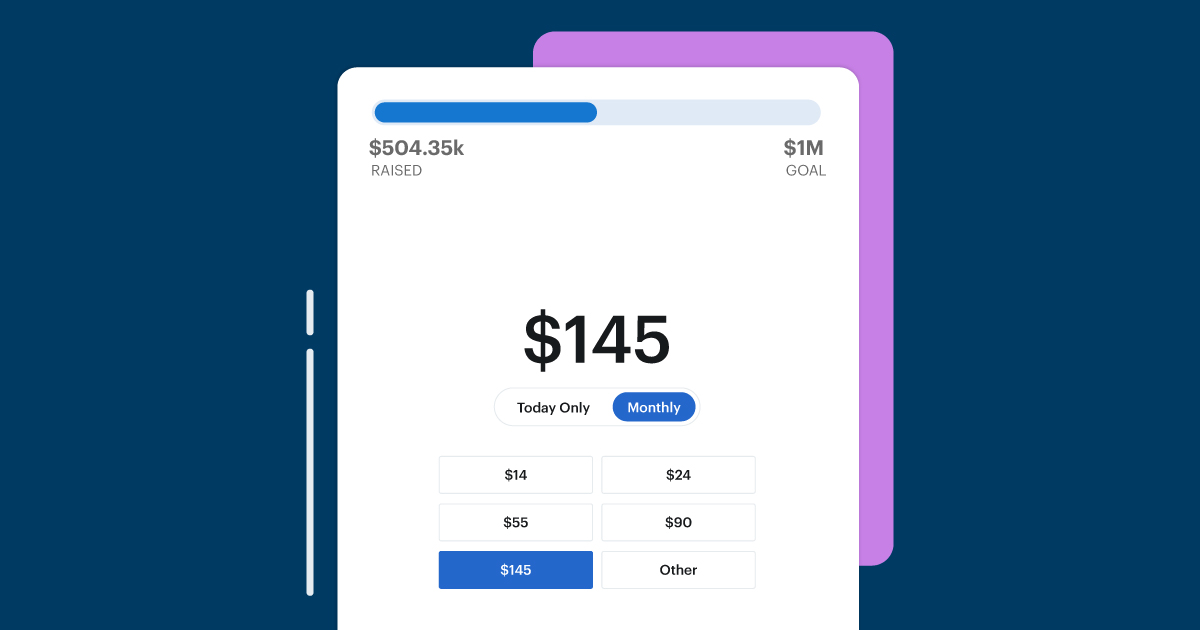
How to Set Donation Ask Amounts Using Data
If you’ve ever looked at your fundraising campaign results and thought, “We should have raised more,” you’re not alone.
One often-overlooked factor? Your donation ask amounts—and how you set them.
The donation amounts you present to donors can directly influence how much they give, and when they’re not based on real data, it’s easy to miss opportunities. Even small adjustments to your donation ask amounts can lead to meaningful increases in average gift size and overall revenue.
Let’s walk through how to set donation ask amounts in a way that’s data-informed and effective across both online and direct mail.
Why donation ask amounts matter
When a donor is deciding how much to give, they’re looking for guidance—whether they realize it or not. That guidance comes from the suggested amounts you present. Those numbers signal what’s typical, what’s meaningful, and what’s possible.
If your highest option is $100, many donors will stay within that range. If your options go up to $500 or $1,000, you’re opening the door to larger gifts.
Setting donation amounts does not come across as pushy. You’re giving donors—who are juggling busy lives—a clear framework to make a quick and easy decision.
When donation ask amounts are aligned with donor behavior, nonprofits often see higher average gift sizes and stronger response rates. Data-driven asks remove uncertainty and help donors give with confidence.
The challenge is that many nonprofits:
- Reuse the same donation ask amounts year after year
- Set numbers based on instinct instead of data
- Show the same amounts to every donor, regardless of their giving history
Over time, that can limit how much you raise.
Pro tip: Don’t make donors guess what to give—guide them with clear, intentional suggested amounts on your donation forms.
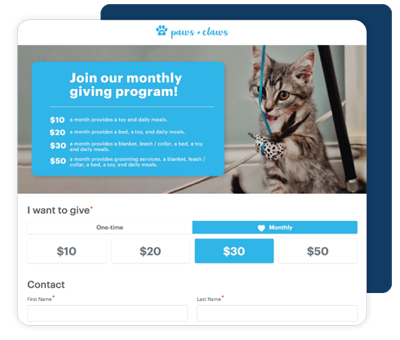
Simplify giving decisions when possible. With DonorPerfect Online Forms, you can preset suggested donation amounts, highlight recommended gifts, and create a seamless experience that encourages higher average gift sizes.
How to set donation ask amounts: A simple framework
With the right fundraising tools and nonprofit CRM system in place, setting donation ask amounts can be simple for development teams. You can build an effective strategy by following four simple steps:
- Analyze your donor data — Identify average, median, and most common gift sizes
- Segment your audience — Group donors based on giving history and engagement
- Set guided ask amounts — Offer a clear range with a natural next step
- Test and refine — Adjust campaigns based on performance over time
This framework helps you move from guesswork to a more consistent, data-informed approach.
How to set donation amounts using donor data
If you’re not sure where to start when setting donation amounts, the data in your nonprofit CRM is the best place to look.
Start with what you already know about your donors and gifts
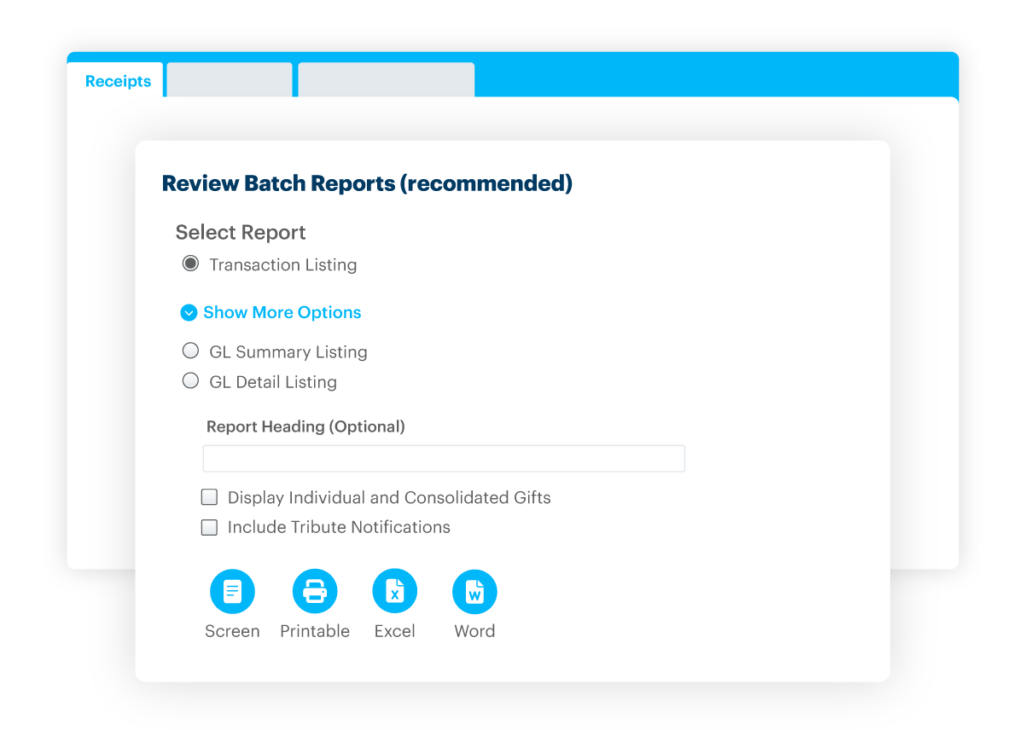
Pull a few simple reports and look for patterns:
- What’s your average gift size?
- What’s your median gift?
- Which amounts show up most often?
These numbers give you a realistic baseline.
With a nonprofit CRM and fundraising system like DonorPerfect, you can quickly identify these giving patterns so your team can engage donors based on interests and history.
If you manage reports day-to-day, start by pulling your most common gift amounts and average gift size. These quick insights can immediately inform your next set of donation ask amounts.
Pro tip: Your best donation ask amounts are already in your data—use reporting to find them.
Make faster, more confident decisions. DonorPerfect’s reporting tools help you track average gift size, identify common donation amounts, and uncover trends so you can set smarter, data-driven ask amounts.
Look at how donors increase giving over time
Many donors increase their giving gradually. If someone gave $50 last year, they might be open to $75 or $100 this year—but probably not $500.
Understanding these patterns helps you set ask amounts that feel like a natural next step.
Segment your audience
Not every donor should see the same numbers.
At a minimum, think about:
- First-time vs. returning donors
- Lower-level vs. mid-level donors
- Recurring vs. one-time supporters
Even light donor segmentation can make your ask amounts more relevant.
Pro tip: Simple segmentation can lead to stronger results—different donor groups should see different ask amounts and impact metrics.
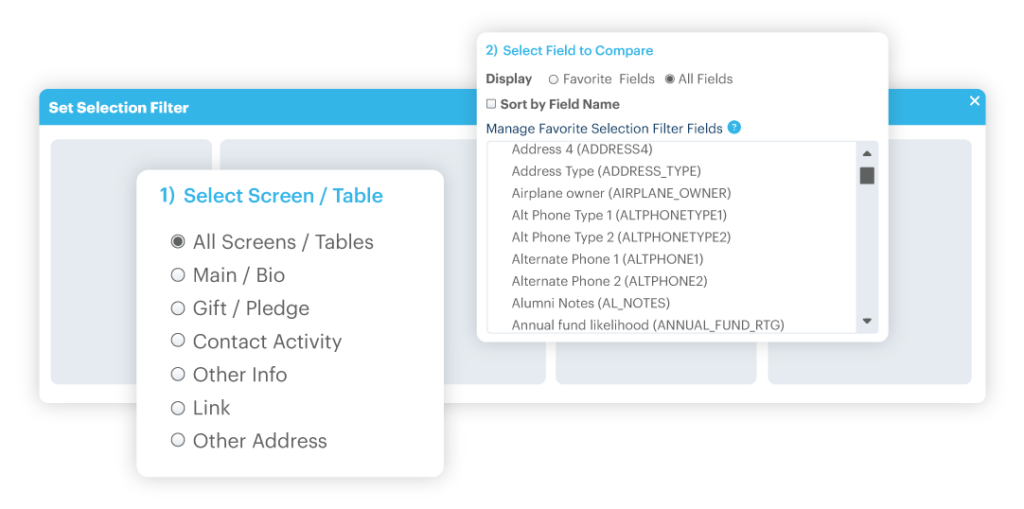
Send more relevant asks. With DonorPerfect’s segmentation and filtering tools, you can group donors by giving history, engagement, or behavior and tailor donation ask amounts that better align with their capacity and habits.
Provide clear, guided ask amounts (or donation tiers)
Whether you’re listing multiple options on a donation form or including a suggested amount in a direct mail letter, the goal is the same: give donors a clear sense of what’s appropriate to give.
In some cases, that means presenting a range of suggested donation amounts. In others—like a personalized appeal—it may mean highlighting a specific amount based on the donor’s past giving.
Either way, your ask should:
- Reflect the donor’s previous giving when possible
- Offer a reasonable increase (not a big leap)
- Provide enough structure to simplify the decision
When donors aren’t left guessing, they’re more likely to give—and often, to give more.
For example:
- Generic approach: Every donor sees the same $25, $50, $100 options
- Data-informed approach: A donor who previously gave $50 sees $75, $100, $150
That small shift can make the ask more relevant and achievable, with higher contributions to support your cause.
Best practices for suggested donation amounts
Once you have a sense of your data, the next step is structuring your suggested donation amounts in a way that feels intuitive and approachable.
Keep the number of options manageable
Three to five options are usually enough. Fewer can feel limiting, while too many can slow people down.
Include a higher option
It’s helpful to include at least one amount that’s higher than what most donors typically give. Some donors will choose it and others will see it as a reference point.
Make it easy to give a different amount
Always include a custom (“other amount”) field. Some donors already know what they want to give.
Use logical increments
Your amounts should feel intentional: $25 → $50 → $100 → $250 works better than $25 → $37 → $83. Consistent steps make decisions easier.
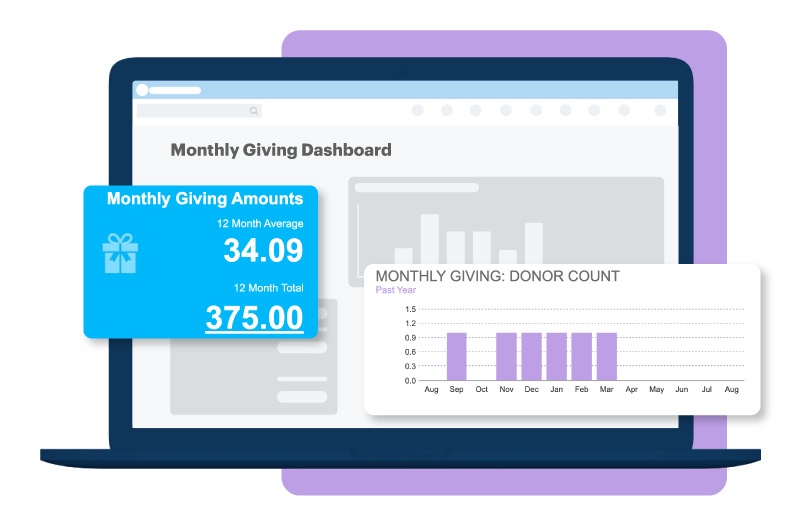
Consider recurring giving
Including a recurring giving option alongside one-time gifts can open the door to more sustained support over time.
Pro tip: Make recurring giving feel like a natural next step by pairing monthly options with your suggested donation amounts.
DonorPerfect makes it easy to promote and manage monthly gifts, helping you grow long-term support and build a predictable revenue channel.
Setting donation ask amounts for online forms
Online giving is quick. Most donors will decide in seconds, and likely from a mobile device. That makes simplicity especially important.
Guide the decision
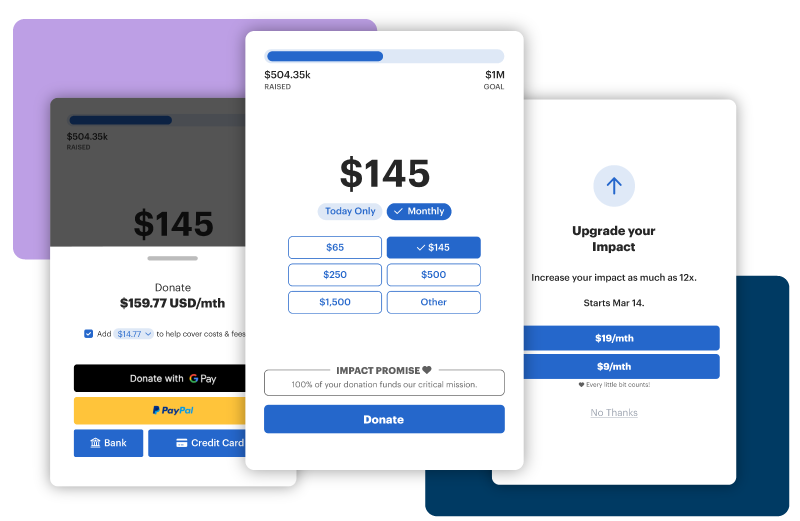
Pre-set suggested donation amounts give donors a starting point. Without them, many people hesitate or default to a lower amount.
Highlight one option
Marking an amount as “recommended” or “most popular” can gently steer donors toward a specific choice.
Pro tip: Small changes to your donation form can make a big difference—test your suggested amounts and see how donors respond.
Optimize your donor management system and giving levels with confidence. DonorPerfect’s integrated online forms and reporting tools let you adjust donation ask amounts and track performance, so you can continuously improve both conversion rates and average gift size.
Keep the donor experience simple
A clean layout with clear options, especially on mobile devices, performs better than a complicated form.
Test what works
One of the biggest advantages of online giving is the ability to test and adjust.
You can experiment with:
- Different starting amounts
- Different increments
- Highlighting different options
Enhancements here can lead to noticeable improvements in both conversion rates and overall giving.
Add impact alongside your ask amounts
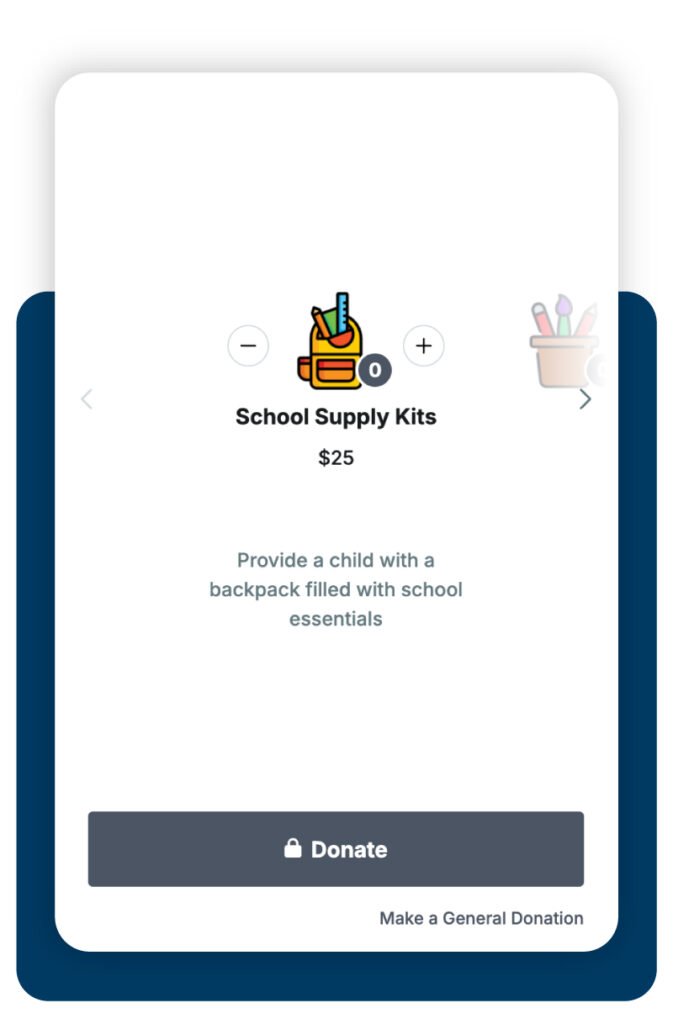
Numbers alone don’t tell the full story. When donors see what their gift accomplishes, it becomes easier to choose an amount—and feel confident in that decision.
Instead of listing amounts on their own, pair each one with a clear outcome.
For example, an animal rescue organization might present options like:
- $50 — Provides food for a rescued animal for one week
- $75 — Covers vaccinations for one pet
- $100 — Supports medical care for an injured animal
- $150 — Helps prepare an animal for adoption
This kind of framing connects the donation directly to impact, making the choice more meaningful—and often leading to higher average gifts.
Pro tip: Pair donation amounts with clear impact to show donors exactly what their gift can accomplish. It helps donors quickly understand: What will my $25 actually support?
Make every gift more meaningful. With DonorPerfect’s online donation forms through Givecloud, you can add impact descriptions next to each suggested amount, allowing donors to see the immediate impact of their gift and feel confident about giving at a higher level.
Direct mail donation ask amounts: A different approach
Direct mail gives you more room to be specific, and that opens up new possibilities.
Personalize when you can
Similar to online giving, instead of using the same amounts for everyone, tailor your ask based on past giving. One effective approach is to increase suggested amounts by about 15–30%, so the increase feels reasonable.
Example: Based on your generous gift of $50 last year, we invite you to consider a gift of $60 to help continue this important work.
Repeat the ask clearly
Include your ask amounts in multiple places, such as in the letter and on the reply card. Repetition helps reinforce the decision.
Connect amounts to impact
When possible, tie your ask amounts to outcomes. This gives donors a more tangible sense of what their gift can accomplish—and makes it easier to choose an amount.
Once your ask amounts are structured, the next step is using them to encourage long-term growth.
Fundraising ask amounts that encourage growth
Increasing donor giving is about guiding donors toward the next level of support in a way that feels intentional and achievable. A strong solicitation strategy removes guesswork and creates a clear path for donors to deepen their impact over time.
Create a clear progression for donors
Donors are more likely to increase their gifts when they can easily see what comes next. Instead of large jumps, use incremental increases that feel realistic based on prior giving. This approach builds momentum and helps donors grow their support without hesitation.
Reinforce donor trust through consistency
Consistency in your ask amounts signals that your organization is thoughtful and strategic. When donors experience steady, predictable increases, they’re more likely to respond positively. Sudden or inconsistent jumps can create friction or uncertainty.
Use data to refine your approach
Your donor data reveals how supporters respond to different ask levels. Use it to identify:
- Where donors are naturally upgrading
- Where giving plateaus
- Where drop-off occurs after an ask
These patterns help you fine-tune your strategy so that ask amounts align more closely with donor behavior and capacity.
Example donation ask amounts by donor type
A simple way to apply this approach is to scale ask amounts based on giving history:
| Donor type | Last gift | Suggested ask range |
| First-time donor | — | $25–$75 |
| Repeat donor | $50 | $75–$125 |
| Monthly donor | $20/month | $25–$35/month |
Common mistakes to avoid when setting donation ask amounts with data
Even strong fundraising programs can run into these issues:
- Using the same amounts for every audience
- Letting ask amounts go unchanged for years
- Setting numbers without checking the current data
- Applying the same strategy to online and direct mail
- Overlooking how donors have given in the past
These are all resolvable and often easier to address than expected.
Pro tip: Clean, enriched donor data makes every fundraising strategy more effective. When your records include accurate contact details, giving history, and key insights, you can segment smarter, personalize outreach, and identify growth opportunities faster.
Strengthen your donor data with expert support. DonorPerfect’s data enhancement services help you clean, enrich, and optimize your database so you can make more informed fundraising decisions.

How online and direct mail asks differ from major gift asks
It’s worth pausing here, because this is where things can get confusing.
The strategies we’ve talked about so far apply to:
- Online donation forms
- Direct mail appeals
- Broad fundraising campaigns
But when it comes to major gifts, the approach shifts.
Major gift asks are individual
Instead of offering suggested donation amounts, major gift fundraising usually involves:
- Researching a donor’s capacity and interests
- Building a relationship over time
- Making a specific, tailored request
In these instances, you are making a thoughtful, direct ask rather than presenting a list of options that belong in a larger campaign initiative.
Why the difference matters
Applying general donation tiers to major donors can feel impersonal. These donors expect a more customized approach.
Data still plays a key role
Even though the format is different, the foundation is the same:
- Giving history — A donor’s past contribution amounts and frequency, used to guide appropriate future ask levels
- Engagement — How a donor interacts with your organization, such as events, emails, or volunteering, indicating their level of interest
- Donor insights — Key data points and patterns that reveal donor preferences, capacity, and behavior to inform more effective asks
The difference is how that information is used. Donors who participate in your online or direct mail campaign can easily level up to become a major donor over time.
Pro tip: Use your donor data to support both broad campaigns and one-on-one asks.
Fundraise with a full picture. DonorPerfect keeps all your donor data in one place, helping you manage campaigns, track relationships, and make informed decisions, whether you’re setting suggested donation amounts or preparing a personalized ask.
How to test and improve your ask strategy over time
Setting donation ask amounts isn’t something you do once and forget.
Try small adjustments
You don’t need to overhaul everything. Start by testing one change at a time.
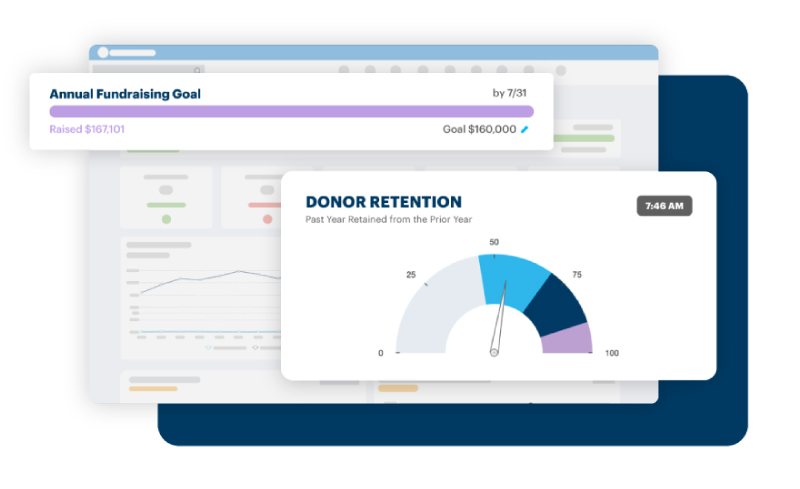
Watch the right metrics
Pay attention to:
- Average gift size
- Response rates
- Overall revenue
These will show whether your changes are working.
Keep refining
Over time, small improvements add up. A slight increase in average gift size across multiple campaigns can make a meaningful difference to your organization’s overall revenue and donor engagement strategies.
Pro tip: Don’t “set and forget” your ask amounts—review and adjust them after every campaign.
Keep improving your results. With DonorPerfect’s real-time reporting and campaign tracking, you can monitor performance, spot trends, and refine your fundraising ask amounts.
There’s no universal formula for donation ask amounts—but there is a practical place to start. Begin by reviewing your most recent campaign data. Look at your average gift size, most common donation amounts, and where donors tend to increase their giving. Then use those insights to shape your next set of asks.
Small adjustments—grounded in your donor data—can lead to meaningful gains across every campaign.
Start by reviewing your most recent results and use those insights to shape your next set of asks—and see how DonorPerfect can turn those insights into smarter donation ask amounts.
Frequently Asked Questions
1. How often should you update donation form ask amounts?
2. How do you set donation ask amounts for new donors?
3. Should donation ask amounts vary by channel?
4. How do you know if donation ask amounts are too high or too low?
5. What tools help set better donation ask amounts?
Get a Demo
See how DonorPerfect helps you set smarter donation ask amounts with your donor data.

Related resources

DAFpay
With DAFpay, donors can recommend a grant from their DAF as part of your online giving experience. That makes it ...

Donor Segmentation Tips: How to Grow a Healthier Email List
Turn supporter data into more relevant outreach and stronger donor engagement Your nonprofit email list is constantly changing. New supporters ...
Follow us on social!