Nonprofit Technology & Fundraising Blog
Subscribe to our mailing list







January 27, 2026 | Donor Data, Donor Retention, Fundraising Operations
Today’s nonprofit leaders have access to more data than ever, but the real opportunity lies in using the right nonprofit reports to guide fundraising strategies and organizational decisions.
When reports are reviewed consistently and thoughtfully, they become a powerful leadership tool beyond just recording results. They reveal what’s working, where improvements may be needed, and how fundraising efforts support long-term goals.
The most effective nonprofits use reporting to stay focused and resilient, connecting day-to-day fundraising performance to nonprofit strategic planning and mission impact.
This blog will walk you through 12 essential nonprofit reports—what they reveal, why they matter, and how they can support clearer decision-making across your fundraising and strategic planning efforts.
Nonprofit reports serve a bigger purpose than just checking boxes for audits or board meetings. When built around your organization’s goals, they become a practical tool for clarity and stronger decision-making across teams.
They help you:
Most importantly, reports create alignment. When leadership, development, and finance teams are looking at the same data, the organization moves faster and with less friction. That alignment is essential to effective nonprofit strategic planning, where goals, fundraising strategy, and operational reality must stay connected and not siloed.
Pro tip: Save hours each month by building reports that reflect how your team operates, with data tailored to what each department needs.
DonorPerfect offers 70+ standard nonprofit reports plus flexible custom reporting tools, allowing you to filter, segment, and view data based on your organization’s unique goals, campaigns, and nonprofit strategic planning priorities.
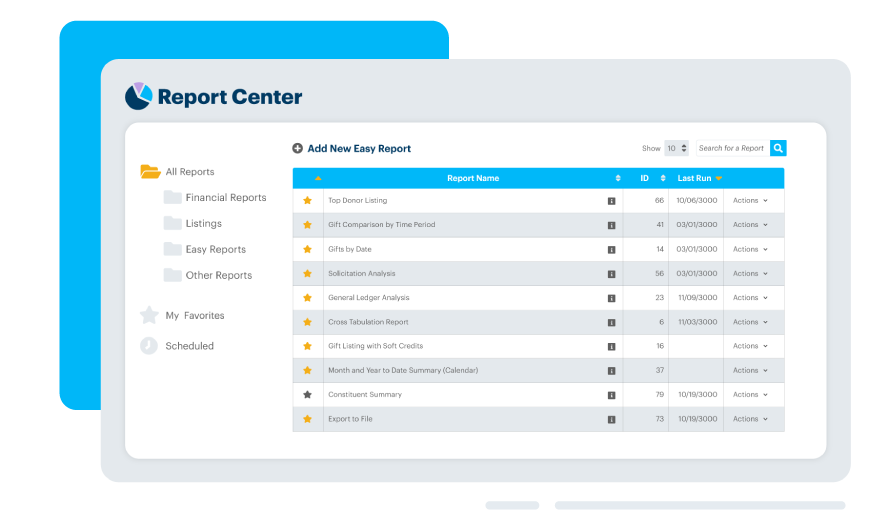
Below is a comprehensive set of nonprofit reports that leaders and fundraisers should utilize and reference regularly. Not all of these reports need daily attention, but all should be part of your ongoing reporting rhythm.
New donors are how your organization grows its community and sustains its mission over time. A new donor acquisition report helps you understand not just how many donors you’re bringing in, but how they’re finding you, and what that means for your future fundraising strength.
A strong new donor report typically shows:
Why it matters:
New donor acquisition fuels long-term revenue, but it’s also one of the most resource-intensive parts of fundraising. This report helps you evaluate which acquisition sources have historically brought in donors who continue to give—so you can invest in strategies that build lasting relationships, not just boost initial numbers.
Additionally, and from a nonprofit strategic planning perspective, this report provides critical insight into whether your donor growth strategy can realistically support future fundraising goals and program expansion.
What to watch for:
Pro tip: Strengthen early donor relationships by tracking the interactions and engagement patterns that lead to a second gift within 12 months. Use Constituent Tracking in DonorPerfect to record donor interactions, appeals, and engagement history alongside new donor reports, helping your team understand which acquisition sources and touchpoints drive early loyalty.
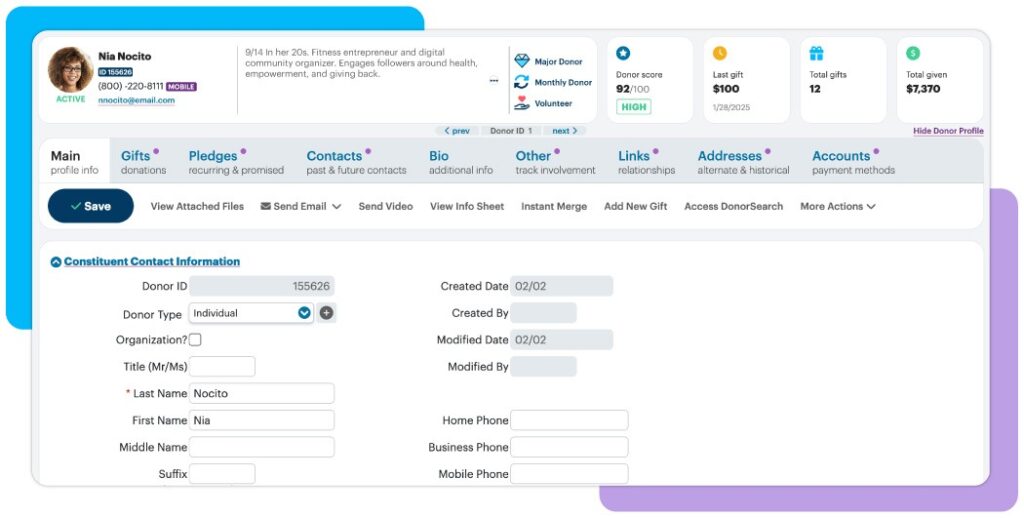
If you’re only focused on new donors, you’re likely leaking revenue. Lapsed donor reports—commonly called LYBUNT (Last Year But Unfortunately Not This) and SYBUNT (Some Year But Unfortunately Not This)—identify donors who have stopped giving.
Why it matters:
Engaging donors who are close to your cause is important and also cost-effective. These reports show where your retention strategy is failing and where recovery is possible.
This data helps inform long-term planning around:
What to watch for:
Pro tip: Reduce donor churn by prioritizing outreach to recently lapsed donors before they fully disengage. Generate reports and filter by gift date, last gift amount, and total giving to gain valuable insight about your donor data and giving patterns. Then, create a personalized outreach plan for donors you’d like to engage.
Donor retention is one of the most reliable indicators of long-term fundraising stability. A donor retention report helps you understand how consistently supporters continue giving over time and where relationships may be strengthening or weakening.
A strong donor retention report breaks down results by:
Why it matters:
Overall retention rates provide a useful snapshot, but segmented retention offers the real insight. It shows which donor groups are building lasting relationships with your organization and which may need a different approach.
Retention data also supports strategic decisions about sustainability, accurate forecasting, and donor experience investments.
What to watch for:
Pro tip: Improve donor retention by identifying high-value donor segments and tailoring stewardship strategies to their giving patterns and interests. Use the Comprehensive Donor Revenue Analysis Report in DonorPerfect to learn more details about your donors, along with your nonprofit’s donor retention rate.
You likely have a strong sense of how much you’re raising overall, but understanding where that revenue is coming from is just as important. A revenue report that breaks down performance by campaign, fund, and solicitation gives you the visibility to see which strategies are working and which need adjustment.
This report connects day-to-day fundraising activity to your nonprofit strategic plan. It shows how well your revenue-generating efforts align with your organizational goals and where you might be investing time or money without a clear return.
Track revenue by:
Why it matters:
This is where fundraising performance and strategic priorities intersect. If your plan prioritizes certain programs or growth areas, this report helps you track whether your revenue is supporting those goals or is being directed elsewhere.
What to watch for:
Recurring donors are a great source of predictable revenue from your most committed supporters. Monthly giving programs create reliable cash flow, reduce fundraising costs over time, and deepen donor relationships.
But to be effective, monthly giving needs active oversight. A recurring giving report helps you stay on top of donor behavior and spot trends that impact long-term sustainability.
This report should show:
Why it matters:
Monthly giving smooths cash flow and strengthens donor loyalty, but only if it’s actively managed.
Recurring revenue supports:
What to watch for:
Pro tip: Stabilize cash flow by monitoring missed recurring gifts monthly and following up quickly. Manage recurring donations, track payment status, and report on monthly giving trends.
Major donors play a significant role in fundraising success, which makes visibility into their giving and engagement essential. Top donor and major giving reports help teams understand who is driving revenue and how those relationships are evolving through the donor engagement cycle.
These reports typically highlight:
Why it matters:
A small number of donors often account for a significant portion of total revenue. These reports help fundraisers spot changes in giving behavior early and ensure major donors receive the attention and stewardship they expect.
These reports also help leadership forecast revenue more accurately and assess major gift strategy alignment.
What to watch for
Pro tip: Pair major giving reports with gift frequency analysis to better understand giving habits across your top donors. The Gift Frequency Analysis Report in DonorPerfect shows how often donors give, what percentage of your base they represent, and how much revenue each group contributes, helping you identify consistent supporters with high long-term value.
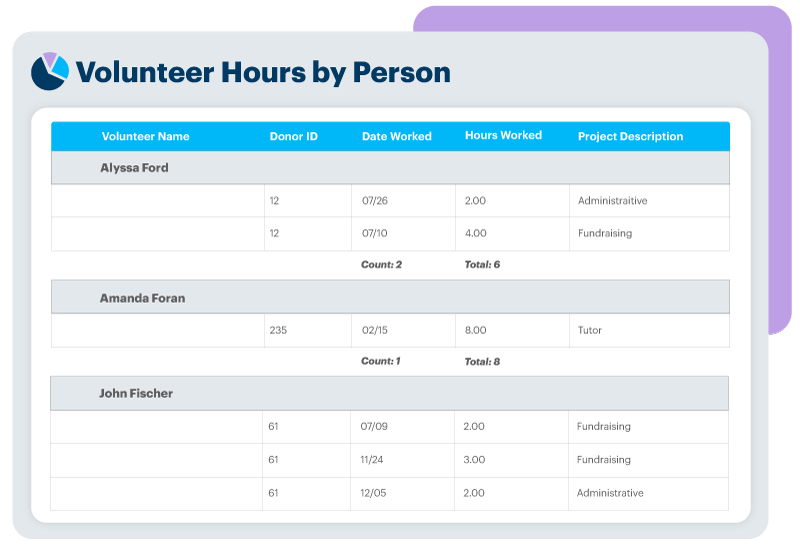
Volunteers play a critical role in how nonprofits deliver programs, extend capacity, and build long-term relationships with supporters. Volunteer hours and engagement reports help organizations understand not only how much support they’re receiving, but how deeply individuals are connected to the mission beyond financial giving.
These reports provide visibility into how volunteers contribute their time and skills across the organization and how that engagement may grow over time.
Volunteer hours and engagement reports typically track:
Why it matters:
Volunteer engagement is often a leading indicator of donor loyalty and future giving. These reports also provide concrete, defensible data for grant applications, impact reporting, and board communications. Volunteer data gives leaders a clearer picture of organizational capacity and program growth. Additionally, volunteers may be good prospects for planned gifts, especially those who have volunteered for years.
Pro tip: Strengthen donor and volunteer retention by identifying individuals who give both time and money and creating engagement paths that deepen both relationships. Track volunteer hours, assignments, and participation history in one place to report on engagement, capacity, and community impact.
Fundraising success depends on how much revenue you generate, along with how efficiently and sustainably you work to achieve your fund development strategies year-round. Fundraising ROI and profitability reports help leaders evaluate the true return on time, budget, and staff effort invested in each campaign or activity.
These reports provide a clearer picture of which fundraising efforts strengthen the organization and which may quietly strain resources.
Fundraising ROI and profitability reports typically measure:
Why it matters:
Some fundraising initiatives generate impressive gross revenue while consuming disproportionate time or budget. ROI reports give leadership the data needed to make informed decisions about where to invest, where to adjust, and which efforts may no longer align with long-term goals.
These insights support smarter budgeting, more accurate forecasts, and a clearer picture of what drives sustainable growth.
Understanding donor behavior over time is essential to effective fundraising planning. Timing and cadence reports reveal when donors are most likely to give and how giving patterns shift throughout the year.
Rather than relying on assumptions or past habits, these reports help teams plan fundraising activities around actual donor behavior.
Timing and cadence reports typically reveal:
Why it matters:
Timing data improves forecast accuracy and helps teams plan appeals, campaigns, and staffing more strategically. It also reduces risk by highlighting periods of vulnerability or opportunity within the fiscal year. These reports shape annual calendars and ensure fundraising timelines align with donor behavior and team capacity.
Donor scoring and engagement reports help you understand where to focus your time and energy across your donor file. Instead of treating all donors the same, these reports surface patterns in giving and engagement so outreach can be more intentional and effective.
A donor scoring report typically evaluates:
Why it matters:
These insights allow fundraisers to segment donors more strategically, prioritize relationship-building efforts, and identify opportunities for upgrades or deeper engagement. Over time, donor scoring supports more personalized fundraising and stronger donor retention.
These reports help align your team’s time and outreach with donors who are most likely to sustain and grow revenue—key for long-term planning.
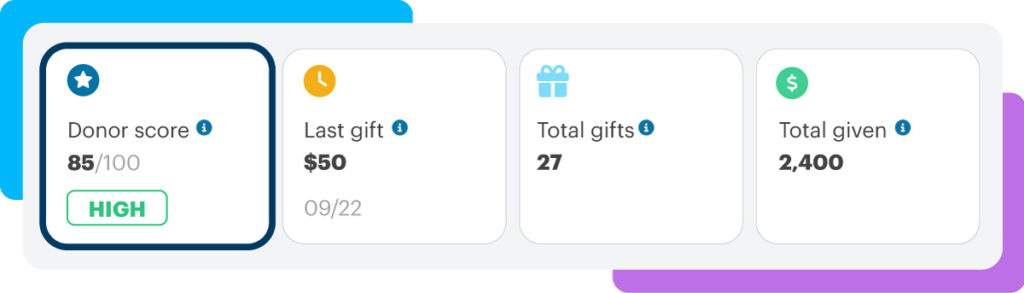
Pro tip: Use donor scoring to focus outreach on supporters who are already showing strong signals of engagement and giving potential. DonorPerfect’s Donor Score highlights donors based on recency, frequency, and engagement, helping your team prioritize outreach and stewardship more effectively.
Dashboards provide nonprofit leaders with a high-level, real-time view of organizational performance by bringing multiple nonprofit reports into a single, easy-to-read interface. Instead of relying on static reports or delayed summaries, dashboards allow executives to monitor key indicators as conditions change.
Well-designed dashboards surface the fundraising metrics that matter most to leadership and boards, helping teams stay focused on progress, risk, and opportunity without getting lost in operational detail.
Dashboards commonly support:
Why it matters:
Dashboards help bridge the gap between day-to-day fundraising activity and long-term nonprofit strategic planning. They allow leaders to track progress toward goals, identify issues early, and have more informed, forward-looking conversations with boards and stakeholders.
Pro tip: Improve leadership alignment by standardizing dashboards around the few metrics that directly reflect strategic priorities and fundraising goals. Add reports to your DonorPerfect dashboard to visualize fundraising performance, donor engagement, and progress toward goals in real time.
Nonprofit reports play a critical role in connecting fundraising activity to an organization’s long-term goals. When reporting is aligned with nonprofit strategic planning, leaders can clearly see how fundraising performance supports—or falls short of—strategic priorities.
Rather than reviewing fundraising results in isolation, these reports help leadership evaluate whether resources are being directed toward the programs, initiatives, and outcomes identified in the strategic plan.
Reports that connect fundraising to nonprofit strategic planning typically show:
Why it matters:
When the right reports are reviewed consistently and used thoughtfully, they become more than performance summaries. They help leadership teams anticipate risk, allocate resources with confidence, and stay aligned around shared goals.
Purposeful use of data helps leaders:
Clarity matters more than perfection when it comes to reporting, especially when you’re deciding what to do next.
You don’t need to track everything—just the right things. The nonprofit reports in this guide are designed to give you visibility into what’s working, what needs attention, and how your fundraising supports your long-term goals. When you make reporting part of your leadership rhythm, it becomes one of your strongest tools for confident, strategic growth.
Ready to turn reports into action? If you want nonprofit reports that support smarter fundraising and stronger nonprofit strategic planning—without adding complexity—DonorPerfect can help. Explore how DonorPerfect makes reporting clearer, faster, and more strategic.
1. What should I do if my nonprofit reports aren’t telling me anything new?
2. How can I get my board more engaged with our nonprofit’s reports?
3. What’s the best way to start using nonprofit reports more strategically?


Follow us on social!